Unlock Your Legacy The Unexpected Path to a Cultural Heritage Conservation Career

webmaster

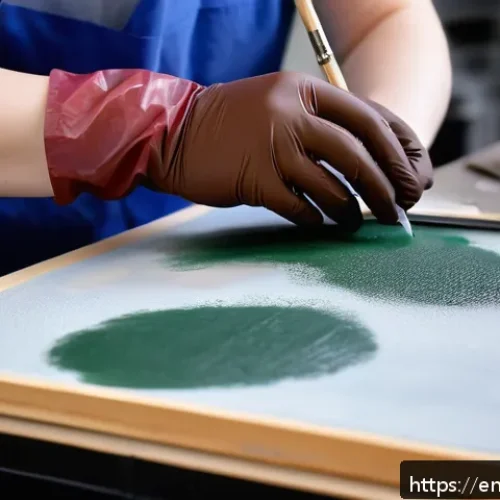
문화재수리 전문가로서의 커리어 패스 - **Prompt:** A female architectural conservator, approximately 30-40 years old, with her hair neatly ...

Have you ever walked through a historic town, gazed at an ancient artifact, or felt a deep connection to the stories woven into old buildings? That incredible feeling, almost like stepping back in time, is exactly what sparked my fascination with cultural heritage.

We’re talking about a career path that uniquely blends art, science, and history, protecting everything from delicate paintings to monumental structures for future generations.

This field is far from static; it’s vibrantly evolving, embracing cutting-edge technology and sustainable practices to keep our global history alive and relevant.

If you’ve ever dreamed of a job where your daily work genuinely impacts the preservation of human creativity and identity, then you’re in the right place.

Ready to explore this incredibly rewarding journey and uncover exactly what it takes to thrive?

Unearthing the Treasures: A Conservator’s Journey

문화재수리 전문가로서의 커리어 패스 - **Prompt:** A female architectural conservator, approximately 30-40 years old, with her hair neatly ...

It’s funny, you know, when I first stumbled into the world of cultural heritage, I pictured dusty archives and quiet museums. Boy, was I wrong! This field is so much more vibrant and dynamic than I ever imagined, truly a blend of intricate artistry, rigorous science, and a deep respect for history.

We’re not just preserving objects; we’re safeguarding stories, connections, and the very essence of human creativity for generations yet to come. It’s an incredibly diverse field, stretching from the meticulous repair of a delicate Renaissance painting to the structural stabilization of an ancient Roman villa.

What truly captured my heart was the sheer variety of expertise needed – you might be working with chemists one day, art historians the next, and skilled craftspeople the day after that.

Every single day brings a fresh challenge and a new opportunity to learn, making it far from a monotonous job. If you thrive on intellectual curiosity and hands-on problem-solving, and you dream of a career that feels profoundly meaningful, then trust me, you’re looking in the right place.

Finding Your Passion in Preservation

When I tell people I work in cultural heritage, their eyes often light up with curiosity. “So, you just, like, fix old stuff?” they’ll ask, and while that’s part of it, it’s so much deeper.

I remember the first time I helped uncover a hidden fresco layer in an old European church; the thrill was absolutely electric. It was like stepping directly into the past, seeing the strokes of an artist who worked centuries ago.

This kind of work demands both a keen eye for detail and a burning passion for the past. It’s not just a job; it’s a vocation where every piece you touch, every artifact you analyze, has a narrative waiting to be understood and protected.

You really do feel like a detective of history, piecing together clues to ensure the integrity of our shared human story.

The Interdisciplinary Marvel of Heritage Work

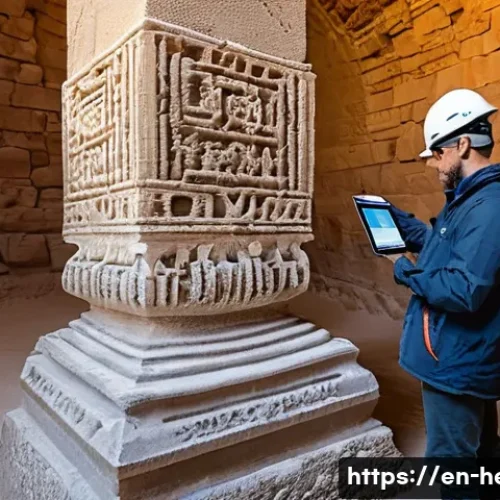
What I love most about this field is its incredibly interdisciplinary nature. You’re never just one thing. One day, I might be immersed in the scientific analysis of pigments using cutting-edge technology, and the next, I could be researching historical conservation techniques to ensure an ethical approach to restoration.

We collaborate constantly with archaeologists, architects, art historians, scientists, and even engineers. It’s this constant cross-pollination of ideas and expertise that keeps the work fresh and exciting.

It also means you’re always learning, always adapting, and always expanding your own skill set, which, personally, I find incredibly invigorating.

The Daily Rhythm: What Life as a Heritage Professional Really Feels Like

Okay, let’s get real about what a day in the life might actually entail. Forget the glamorized movie versions; this job is often hands-on, meticulous, and sometimes, frankly, a bit messy!

I recall one project where we were working on an archaeological site, and I spent weeks carefully brushing away layers of soil, feeling a sense of immense privilege with every tiny shard we uncovered.

It’s a combination of laboratory work, where you might be analyzing samples under a microscope or conducting environmental monitoring, and field work, which could mean anything from stabilizing a crumbling historic facade to meticulously documenting artifacts in a museum storage facility.

You learn to be incredibly patient, detail-oriented, and adaptable, because no two projects are ever truly the same. The unexpected is often just around the corner, and that’s precisely what makes it so engaging.

From Lab Coats to Hard Hats: A Spectrum of Roles

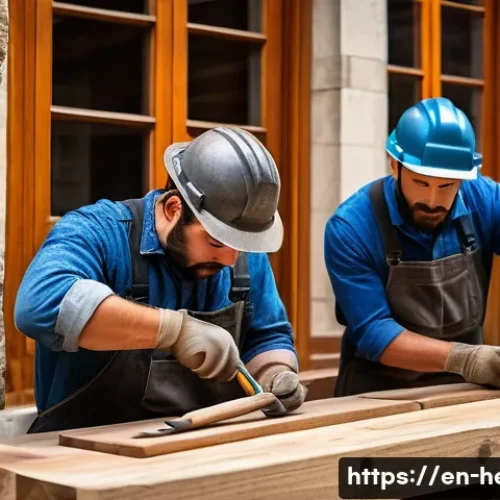
When I first started, I thought “conservator” was the only gig in town, but I quickly learned that the umbrella of cultural heritage is vast. You’ve got object conservators specializing in anything from textiles to metals, paper conservators meticulously repairing documents, architectural conservators preserving buildings, and archaeological conservators working on excavations.

Then there are preventive conservators who focus on environmental controls and storage, and collection managers who meticulously catalogue and care for entire museum collections.

My own path led me towards architectural conservation, and I’ve been fortunate enough to work on some truly breathtaking historic buildings that just take your breath away.

It’s a field where you can really carve out a niche that perfectly aligns with your specific interests and talents.

Navigating the Challenges and Celebrating the Wins

Let’s be honest, it’s not all glorious discoveries. There are significant challenges, too. Funding can be tight, ethical dilemmas arise when considering intervention, and sometimes, you’re battling against the relentless march of time and decay.

I remember struggling with a particularly complex restoration, feeling frustrated when progress was slow. But then, when you finally achieve a breakthrough, or see a piece of history brought back to life, the feeling of accomplishment is absolutely unparalleled.

It’s those moments – seeing the relief on a community’s face when their beloved landmark is saved, or witnessing a student’s wonder at an ancient artifact – that truly make all the hard work worthwhile.

The passion of the people you work with is also a huge motivator; we’re all in this together, driven by a shared mission.

Advertisement

The Essential Toolkit: Skills and Mindset for Success

If you’re thinking about diving into this world, you might be wondering what it really takes. Beyond the academic qualifications, which we’ll touch on soon, there’s a whole host of personal qualities that truly make a difference.

I’ve seen firsthand that a combination of scientific aptitude and artistic sensibility is key. You need to understand the chemistry of materials, but also appreciate the aesthetic intent of the original creator.

Critical thinking is paramount because every conservation challenge is a unique puzzle requiring careful assessment and innovative solutions. You also need an almost obsessive attention to detail – a tiny crack, a subtle discoloration, these are the clues we follow to understand and protect an artifact.

Mastering the Blend of Art and Science

It’s often said that conservation is where art meets science, and I can wholeheartedly attest to that. My colleagues and I often find ourselves delving deep into material science, understanding the degradation processes of different substances, and applying sophisticated analytical techniques.

But simultaneously, we’re engaging with art history, cultural contexts, and the ethical considerations of interfering with an original work. I’ve spent hours examining old texts, deciphering symbols, and trying to get into the mind of the artisans from centuries past.

It’s this beautiful dance between objective scientific inquiry and subjective artistic interpretation that makes the work so rich and endlessly fascinating.

You’re constantly toggling between different modes of thought, which keeps your brain wonderfully engaged.

Cultivating Patience, Precision, and Problem-Solving

If there’s one thing this career has taught me, it’s patience. Truly, sometimes a single repair can take weeks or even months of painstaking, meticulous work.

Precision isn’t just a buzzword; it’s absolutely non-negotiable. One wrong move can have irreversible consequences. And then there’s problem-solving – oh, the problem-solving!

Every project presents its own unique set of mysteries: why is this deteriorating in this particular way? What’s the best, least invasive treatment? How can we ensure its long-term stability?

These are the questions that keep us on our toes and push us to constantly learn and innovate. It’s a career that continuously hones your analytical abilities and your capacity for calm, measured action under pressure.

Forging Your Path: Education and Training in Conservation

So, you’re hooked, right? Now, how do you actually get started on this incredible journey? Well, it’s definitely not a field you just wander into without some serious preparation.

Most professional conservators hold advanced degrees, typically master’s degrees, in conservation or a related field. These programs are incredibly intensive, blending scientific coursework (think chemistry, physics, material science) with art history, archaeology, and hands-on laboratory work.

I remember my own program being incredibly demanding, but the skills and knowledge I gained were absolutely invaluable. It’s about building a foundational understanding that allows you to approach any heritage challenge with a robust, evidence-based methodology.

Decoding Conservation Programs and Specializations

When you’re looking at programs, you’ll quickly discover that many offer specializations. You might find programs focused on paper and archives, paintings, objects, textiles, or architectural conservation.

Some even have incredible facilities where you get to work on actual historical artifacts, which is where the real learning happens. Internships are absolutely crucial; they provide that invaluable real-world experience that no classroom can fully replicate.

I spent a summer interning at a historical society, and that’s where I truly understood the practical application of everything I’d learned in theory.

It’s about getting your hands dirty and learning from seasoned professionals who have been in the trenches for years.

The Lifelong Learning Journey

문화재수리 전문가로서의 커리어 패스 - **Prompt:** A male objects conservator, in his late 20s to early 30s, wearing a clean, white lab coa...

Here’s the thing about cultural heritage: you never really stop learning. Technologies evolve, new materials are developed, and our understanding of historical contexts deepens.

Professional development is not just encouraged; it’s essential. Attending workshops, conferences, and staying abreast of the latest research keeps you at the cutting edge of the field.

I’m constantly reading new journals and connecting with peers to discuss new techniques or ethical considerations. It’s a commitment to lifelong learning, but honestly, it’s one of the most exciting aspects of the job.

There’s always something new to discover, a fresh perspective to consider, and another skill to master.

Advertisement

The Digital Frontier: How Technology is Revolutionizing Preservation

It’s easy to think of cultural heritage as being solely focused on the past, but believe me, this field is anything but stagnant! We’re embracing cutting-edge technology at an incredible pace, using it to not only understand artifacts better but also to preserve them more effectively and even make them more accessible to the public.

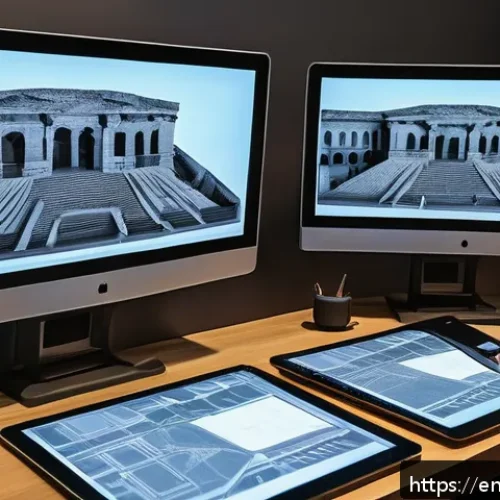
I’ve been involved in projects that utilize 3D scanning to create incredibly detailed digital models of historical sites, allowing us to monitor their condition over time with unprecedented accuracy and even reconstruct lost elements virtually.

It’s mind-boggling how much innovation is happening, and it’s making our work both more precise and more impactful.

Leveraging Digital Tools for Analysis and Documentation

Think about it: advanced imaging techniques like multispectral and infrared photography can reveal hidden details in paintings or ancient texts that are invisible to the naked eye.

We’re using X-rays and CT scans to peer inside objects without causing any damage, understanding their internal structure and past repairs. And then there’s geographic information systems (GIS) for mapping and managing archaeological sites and historic landscapes.

These tools aren’t just cool gadgets; they’re fundamentally changing how we approach conservation, allowing us to make more informed decisions and conduct more thorough documentation.

It feels like we’re armed with superpowers sometimes!

Virtual Reality and Public Engagement

Beyond analysis, technology is also transforming how we share heritage with the world. Virtual reality and augmented reality are creating immersive experiences that transport people to ancient sites or allow them to interact with artifacts that are too fragile to be handled.

Imagine walking through a digitally reconstructed Roman forum or examining a pharaoh’s sarcophagus up close, all from your living room! This isn’t just about entertainment; it’s a powerful way to foster appreciation and understanding of cultural heritage, reaching audiences that might never have the opportunity to visit these sites in person.

It’s a testament to how dynamic this field truly is, constantly finding new ways to connect people with their shared history.

The True Impact: Why This Work Resonates So Deeply

Honestly, if you’re looking for a career that feels truly meaningful, one where you can genuinely see the positive ripple effects of your efforts, cultural heritage preservation is it.

It’s not just about saving old things; it’s about preserving human identity, connecting us to our ancestors, and providing invaluable insights into where we’ve come from.

I can’t even count how many times I’ve finished a project and felt this profound sense of contributing to something much bigger than myself. Knowing that something I worked on will stand for hundreds more years, inspiring future generations, is an incredibly powerful feeling that few other careers can offer.

Connecting Generations Through Shared Stories

Cultural heritage acts as a bridge between the past, present, and future. Every artifact, every historical building, every traditional craft holds a piece of a story, a lesson, or an inspiration from those who came before us.

By preserving these elements, we’re not just archiving them; we’re keeping those stories alive, allowing them to continue teaching and moving people across generations.

I’ve seen kids’ eyes light up when they learn about a particular ancient tool, sparking curiosity and a connection to distant civilizations. That, to me, is the true magic of this work – facilitating those incredible, often emotional, connections.

The Unseen Value: Cultural Heritage’s Role in Society

It’s easy to focus on the tangible aspects, but the impact of cultural heritage runs much deeper. It enriches our lives, fosters a sense of community pride, and even contributes to economic development through tourism.

Beyond that, it helps us understand our diverse world, promoting empathy and cross-cultural understanding. Protecting a sacred site for one community can have a profound impact on their identity and spiritual well-being.

This isn’t just about aesthetics; it’s about safeguarding the very fabric of human civilization, our collective memory, and the enduring legacy of human ingenuity and resilience.

Role Type Key Focus Areas Typical Work Environment
Objects Conservator Treatment of artifacts (ceramics, metals, wood, glass); material analysis Museum labs, private conservation studios
Architectural Conservator Preservation of historic buildings & structures; material analysis, structural assessment Historic sites, construction sites, architectural firms
Paper & Archives Conservator Treatment of documents, books, maps, photographs; environmental controls Libraries, archives, special collections
Archaeological Conservator Stabilization & treatment of excavated artifacts; on-site preservation Archaeological digs, field labs, museums
Preventive Conservator Environmental monitoring, storage solutions, disaster preparedness Museums, galleries, archival institutions
Advertisement

Bringing It All Together

Whew! What a journey we’ve been on, diving deep into the fascinating universe of cultural heritage preservation. I truly hope this peek behind the curtain has shown you just how much passion, precision, and profound purpose goes into safeguarding our shared human story. It’s a field that demands your heart as much as your mind, where every discovery feels like a personal triumph and every preserved artifact speaks volumes across the centuries. It’s not just about protecting old objects; it’s about nurturing the very soul of humanity, ensuring that the echoes of our past continue to inspire, inform, and unite us all.

Handy Tips and Insights for Your Journey

1. Dive into Local Heritage: You don’t need to travel the world to connect with cultural heritage! Start right in your own backyard. Visit local museums, historical societies, or even just take a walk through an old neighborhood. You might be surprised by the incredible stories waiting to be uncovered. Many communities have fantastic walking tours, volunteer days at historic sites, or even digital archives you can explore from home. It’s a beautiful way to feel rooted in your surroundings and truly appreciate the history that shapes where you live.

2. Embrace Digital Exploration: The digital age has revolutionized how we access and appreciate heritage. Spend some time exploring online museum collections – many major institutions offer breathtaking virtual tours and high-resolution images of their artifacts. Websites like Google Arts & Culture are treasure troves of information, offering virtual reality experiences and detailed insights into art and history. It’s an accessible way to engage with cultural heritage from around the globe, broadening your perspective and sparking new interests without ever leaving your couch.

3. Support Preservation Efforts: If you feel passionate about protecting cultural heritage, there are many ways to contribute. Consider becoming a member or donating to a local historical society, museum, or an international preservation organization. Even advocating for the importance of heritage in your community, sharing information on social media, or simply choosing to visit and support heritage sites can make a significant difference. Every little bit helps ensure these invaluable treasures endure for future generations to experience and learn from.

4. Consider a “Heritage Getaway”: For your next vacation, why not plan a trip around a historical site, an ancient city, or a region rich in cultural traditions? Immersing yourself in the history and art of a place can be an incredibly rewarding and educational experience. From the ancient ruins of Rome to the majestic castles of Scotland or the vibrant cultural festivals in Mexico, these trips offer a tangible connection to the past that goes far beyond any textbook. Plus, your tourism dollars often directly support the local conservation efforts.

5. Connect with the Professionals: If you’re seriously considering a career in this field, don’t hesitate to reach out to professionals! Look for conservators, archaeologists, or museum curators on LinkedIn, or attend public lectures and workshops. Many are incredibly generous with their time and advice, offering insights into their career paths and the realities of the job. Informational interviews can be invaluable for understanding the specific specializations and educational requirements, giving you a clearer roadmap for your own journey into cultural heritage.

Advertisement

Key Takeaways and Final Thoughts

At its heart, cultural heritage preservation is a dynamic and incredibly rewarding field that seamlessly blends the rigorous methods of science with the profound appreciation of art and history. It’s a career, or even just a passionate interest, that fosters deep critical thinking, meticulous attention to detail, and an unwavering commitment to storytelling. Whether you’re exploring ancient civilizations through modern technology or carefully restoring a centuries-old artifact by hand, the impact of this work resonates far beyond the tangible. It truly is about connecting people across time, safeguarding our collective identity, and ensuring that the legacies of human ingenuity and creativity continue to inspire and enlighten for centuries to come. The journey is challenging, yes, but the sense of purpose and fulfillment? Absolutely unmatched.

Frequently Asked Questions (FAQ) 📖

Q: What does a career in cultural heritage actually look like day-to-day? Is it all just quiet research, or is there more hands-on work involved?

A: Oh, this is such a fantastic question, and honestly, the answer is “it depends!” That’s the beauty of it. When I first started out, I pictured myself primarily tucked away in archives, poring over old documents, and yes, that’s definitely a part of it for some roles, like an archivist or historian.
But trust me, this field is incredibly diverse! One day, you might be at a historic site, inspecting buildings and monuments to assess preservation needs, working with a team to ensure everything meets conservation standards, and even presenting project proposals to the public.
Another day could see you curating a new exhibit, working with community groups to tell their stories, or developing educational programs to bring history alive for visitors.
I’ve seen colleagues use 3D laser scanning to create incredibly detailed digital models of ancient artifacts or even entire heritage sites, ensuring their preservation for generations to come, which is just mind-blowing.
So, whether you’re a hands-on problem-solver, a meticulous researcher, or a creative communicator, there’s a place for you. The common thread is a deep passion for safeguarding our collective past and making it accessible to everyone.
It’s a dynamic mix, and that’s what keeps it so exciting!

Q: What kind of education and skills do I need to break into this field? Do I need a specific degree, or are there other ways in?

A: This is a question I get all the time, and it’s a really important one! While many roles in cultural heritage do benefit from a higher education degree, the good news is that the field values a broad range of subjects and experiences.
An undergraduate degree is typically a baseline, and fields like history, archaeology, cultural heritage studies, art history, or even architecture and building conservation are incredibly useful.
For more specialized roles, or if you want to advance, a postgraduate qualification in heritage management or historic conservation can definitely give you an edge.
But here’s the real secret: practical experience is KING. I can’t stress this enough! Employers are actively looking for real-world experience, often gained through internships, volunteering, or even apprenticeships.
I remember volunteering at a local historical society, and that hands-on experience taught me more than any textbook ever could about the daily grind and the immense satisfaction of the work.
Beyond formal education, skills like excellent communication, meticulous research, critical thinking, project management, and a good dose of cultural sensitivity are absolutely essential.
And don’t forget transferable skills – if you’re coming from another career, you’d be surprised how much of your past experience can be applied here!

Q: Is a career in cultural heritage stable, and what are the opportunities for growth in the long run?

A: That’s a very practical and smart question, especially in today’s world! From my perspective, while the heritage sector has its unique challenges, it’s definitely growing and evolving, creating some exciting opportunities.
It’s true that some roles might have lower salaries initially or be project-based, but the field itself is expanding, especially with the integration of new technologies and a global recognition of heritage’s importance for sustainable development.
We’re seeing more demand for specialists in digital heritage, using things like AI, virtual reality, and 3D modeling to document, preserve, and even create immersive experiences for the public.
This means new career paths are constantly emerging, from digital content creators to specialists in virtual tourism. As you gain experience, you can move into senior leadership positions, become a heritage consultant, or even specialize in areas like fundraising for heritage organizations.
The key is continuous professional development and being open to new technologies and interdisciplinary collaboration. While it might not always offer the highest pay, the job satisfaction that comes from preserving human creativity and identity, and knowing you’re making a tangible impact on the world, is truly priceless.
It’s a career where you genuinely learn something new every single day, and that, to me, is stability in itself!